Did Noral Ose the Baby Un Beung Humnz


A crying newborn, a few days after nativity



8-calendar month-old infant; as a common feature, optics are commonly large in relation to the face.
An infant (from the Latin word infans, significant 'unable to speak' or 'speechless') is the more formal or specialised synonym for the common term baby , meaning the very young offspring of man beings. The term may also be used to refer to juveniles of other organisms. A newborn is, in vernacular use, an infant who is simply hours, days, or upward to one month old. In medical contexts, newborn or neonate (from Latin, neonatus, newborn) refers to an infant in the first 28 days afterwards nativity;[1] the term applies to premature, full term, and postmature infants.
Before birth, the term fetus is used. The term babe is typically applied to very young children under i year of age; however, definitions may vary and may include children up to two years of age. When a human child learns to walk, the term toddler may be used instead.
Other uses
In British English language, an infant school is for children aged betwixt 4 and seven.
As a legal term, infancy is more like being a minor, and continues until a person reaches 18 years of historic period.[2]
Physical characteristics of newborns
A newborn's shoulders and hips are wide, the abdomen protrudes slightly, and the arms and legs are relatively long with respect to the rest of their body.
Length
In developed countries, the average full body length of a newborn is 35.vi–50.eight cm (14.0–20.0 in), although premature newborns may be much smaller.
The way to mensurate a baby'south length is to lay the baby downward and stretch a measuring record from the summit of the caput to the bottom of the heel.
Weight
In developed countries, the average birth weight of a full-term newborn is approximately 3.iv kg (7+ 1⁄ii lb), and is typically in the range of 2.seven–iv.six kg (6.0–10.i lb).
Over the beginning five–vii days following birth, the body weight of a term neonate decreases past 3–seven%,[3] and is largely a result of the resorption and urination of the fluid that initially fills the lungs, in addition to a filibuster of often a few days before breastfeeding becomes effective. After the first calendar week, healthy term neonates should gain 10–20 grams/24-hour interval.[three]
Head
A newborn'due south head is very large in proportion to the body, and the cranium is enormous relative to his or her face up. While the developed human skull is about one seventh of the total body length, the newborn'southward is about i⁄iv . Normal caput circumference for a full-term infant is 33–36 cm at nativity.[4] At nascency, many regions of the newborn'south skull have not yet been converted to bone, leaving "soft spots" known equally fontanels. The two largest are the diamond-shaped anterior fontanel, located at the tiptop front portion of the head, and the smaller triangular-shaped posterior fontanel, which lies at the back of the head. Afterwards in the child'south life, these bones volition fuse together in a natural process. A poly peptide called noggin is responsible for the delay in an infant'southward skull fusion.[v]
During labour and birth, the babe'southward skull changes shape to fit through the birth canal, sometimes causing the child to exist born with a misshapen or elongated caput. It will unremarkably return to normal on its own inside a few days or weeks. Special exercises sometimes advised by physicians may assist the procedure.
Pilus
Some newborns take a fine, downy trunk hair called lanugo. It may be peculiarly noticeable on the dorsum, shoulders, forehead, ears and face of premature infants. Lanugo disappears within a few weeks. Infants may exist born with full heads of hair; others, particularly caucasian infants, may take very fine hair or may even exist bald. Amongst fair-skinned parents, this fine hair may be blonde, even if the parents are non. An baby's hair color and texture tin modify: ruby-red tin give style to blond, curly tin go straight, and thick, dark pilus could reappear a lot sparser and lighter.[ commendation needed ] The scalp may besides be temporarily bruised or swollen, especially in hairless newborns, and the area effectually the eyes may be puffy.
Skin
Immediately after nativity, a newborn'due south pare is oftentimes grayish to dusky blue in color. As soon as the newborn begins to breathe, ordinarily within a minute or ii, the skin'south color reaches its normal tone. Newborns are moisture, covered in streaks of claret, and coated with a white substance known as vernix caseosa, which is hypothesised to act every bit an antibacterial barrier. The newborn may also have Mongolian spots, various other birthmarks, or peeling peel, particularly on the wrists, easily, ankles, and anxiety.
Genitals
A newborn's genitals are enlarged and reddened, with male infants having an unusually big scrotum. The breasts may also be enlarged, even in male infants. This is caused by naturally occurring maternal hormones and is a temporary condition. Females (and even males) may really discharge milk from their nipples (sometimes called witch'southward milk), or a bloody or milky-like substance from the vagina. In either case, this is considered normal and will disappear with fourth dimension.
Umbilical string
The umbilical string of a newborn is bluish-white in color. After birth, the umbilical string is unremarkably cutting, leaving a one–ii inch stub. The umbilical stub will dry, shrivel, darken, and spontaneously fall off inside about 3 weeks. This will later become a abdomen-button later it heals.
The umbilical string contains three vessels: two arteries and ane vein. The two arteries conduct blood from the babe to the placenta while one vein carries blood back to the baby.
Care and feeding
Infants cry every bit a form of basic instinctive communication.[half dozen] A crying infant may exist trying to express a variety of feelings including hunger, discomfort, overstimulation, boredom, wanting something, or loneliness.
Breastfeeding is the recommended method of feeding by all major infant wellness organizations.[7] If breastfeeding is not possible or desired, canteen feeding is washed with expressed breast-milk or with infant formula. Infants are born with a sucking reflex assuasive them to extract the milk from the nipples of the breasts or the nipple of the infant bottle, as well as an instinctive beliefs known as rooting with which they seek out the nipple. Sometimes a wet nurse is hired to feed the infant, although this is rare, especially in adult countries.
Adequate food consumption at an early age is vital for an infant's development. The foundations of optimum health, growth, and neurodevelopment across the lifespan are established in the first 1000 days of life.[8] From birth to half-dozen months, infants should consume only breast milk or an unmodified milk substitute. Equally an infant's nutrition matures, finger foods may be introduced as well every bit fruit, vegetables and small amounts of meat.[9]
As infants grow, food supplements are added. Many parents cull commercial, ready-made baby foods to supplement chest milk or formula for the child, while others adapt their usual meals for the dietary needs of their child. Whole cow's milk can be used at one yr, but lower-fat milk is non recommended until the child is 2 to iii years erstwhile. Weaning is the process through which chest milk is eliminated from the infant'southward diet through the introduction of solid foods in exchange for milk.[10] Until they are toilet-trained, infants in industrialized countries vesture diapers. The transition from diapers to grooming pants is an of import transition in the development of an infant/baby to that of a toddler. Children need more sleep than adults—upwards to xviii hours for newborn babies, with a declining rate equally the child ages. Until babies learn to walk, they are carried in the arms, held in slings or baby carriers, or transported in babe carriages or strollers. About industrialized countries have laws requiring child safety seats for babies in motor vehicles.
Common intendance issues
- Baby colic
- Bassinet/crib
- Cradle cap
- Day care
- Diaper rash
- Infant massage
- Immunization
- Pacifier
- Paternal bond
- Swaddling
- Teething

Benefits of touch on
Studies take shown that infants who take been the recipients of positive bear upon experience more benefits as they develop emotionally and socially. Experiments have been done with infants up to four months of age using both positive touch (stroking or cuddling) and negative touch (poking, pinching, or tickling). The infants who received the positive affect cried less often and also vocalized and smiled more than the infants who were touched negatively. Infants who were the recipients of negative touching have been linked with emotional and behavioral issues afterward in life. A lower amount of physical violence in adults has been discovered in cultures with greater levels of positive physical touching.[11]
Language development
Caregivers of an babe are advised to pick up on the infant's facial expressions and mirror them. Reproducing and empathizing with their facial expressions enables infants to feel effectiveness and to recognize their ain actions more than easily (see mirror neurons). Exaggeratedly reproduced facial expressions and gestures are recommended, every bit they are clearer forms of expression. The infant's blathering should also be picked upwardly and repeated. By imitating each other'south sounds the showtime unproblematic dialogues are initiated.[12] Accentuated pronunciation and melodic intonation arrive easier to recognize private words in a sentence.[13] However, information technology is not advisable to employ simplified "baby language" (e.g. "Did you 'ouch'?" instead of, "Did y'all hurt yourself?").[xiv]
Even if parents cannot yet sympathize infants' babbling, a timely response by parents to babbling leads to faster language acquisition.[15] This was confirmed by researchers who get-go studied mothers' behavior towards 8-month-onetime infants and afterwards tested the infants' vocabulary when they were fifteen months old.[16] A first important development of infants is the discovery that they tin can influence their parents through babbling (development of intentional advice).[16] Parents can encourage this by engaging with their infants in babbling. This in turn promotes further linguistic communication development, as infants then turn to their parents more often.[15]
Previous studies have shown that the infant'southward speech is encouraged when parents, for case, grinning in the infant's direction or touch the babe every time the baby looks at them and babbles. It also helps if parents respond to what they remember their baby is saying (for example, giving a ball or commenting when the baby looks at the ball and babbles).[15] Responding to sounds produced when the baby looks at an object (object-directed vocalizations) thus provide an opportunity to larn the name of the object. In this mode, babies also learn that sounds are associated with objects.[16] However, linguistic communication development is only achieved if parents react positively (due east.g. smile) in response to the infant's blathering. A loftier response rate without a connection to the baby's utterances does not lead to language promotion.[16] It is detrimental to language development if a mother instead tries to divert the babe's attention to something else.[17]
Sleep

Infants sleeping at the maternity hospital in Kotka, Finland in the 1950s
A 2018 review analysed 146 studies on infant sleep behavior and listed several factors that show an effect on sleep duration and the number of nighttime wakings. For example, stimulating daytime activities, reading aloud before sleeping, early bedtime, a sleep routine, and fugitive television and media exposure earlier bedtime are associated with longer sleep duration and fewer nighttime awakenings.[18] : S. 24
Furthermore, potent parental involvement at falling asleep is associated with shorter slumber elapsing, slower falling asleep and more frequent night-time awakenings in the studies analysed. Potent parental interest is understood to include parental presence, cradling, or breastfeeding at bedtime, also every bit carrying the infant to slumber and then putting the baby downwardly. Stiff parental interest has a negative effect on infant sleep because the baby cannot develop the ability to self-soothe. On the other manus, depression parental interest at bedtime gives the infant room to learn self-soothing and self-regulation.[xviii] : Southward. 24
In 2020, a Finnish study established (according to the inquiry leader) for the offset fourth dimension a reference value for infant slumber quality based on a large data fix (almost 5,700 babies).[19] [20] Almost twoscore% of the participating parents with viii-month-old babies said they were worried near their slumber. In fact, sleep problems were common; however, children fall asleep faster, wake upward less often during the night and stay awake less late at night the older they get. At the aforementioned fourth dimension, total sleep time decreases.
The study was also able to determine reference values for normal sleep (encounter table). Children who sleep significantly less than boilerplate would unremarkably benefit from supportive measures, for which a number of methods would exist available (a discussion with the pediatrician or see, for example, the commodity on sleep grooming).[15]
| Fourth dimension until falling asleep | Wakings per dark | Waking time per nighttime | |
|---|---|---|---|
| 12 months |  0 – thirty min 0 – thirty min | 0x – 2.5x | 0 – 20 min |
 thirty – 40 min thirty – 40 min | 2x – 4x | 20 – 45 min | |
 > 40 min > 40 min | > 4x | > 45 min | |
| 24 months | 0 – 30 min | 0x – 1x | 0 – 8 min |
| 30 – 45 min | 1x – 2x | 8 – 15 min | |
| > 40 min | > 2x | > 40 min |
- = normal sleep
- = Sleep hygiene should be improved
- = information technology is recommended to seek help (pediatrician, sleep counselling).
Maternal sensitivity
Maternal sensitivity plays a item role in the human relationship with the infant and for favorable emotional development. This means beingness attentive to the baby's behavioral expressions, not misinterpreting the baby's expressions because of 1'southward own moods, reacting immediately to the state of affairs and finding a response that is appropriate to the context and the expressed needs. A secure attachment is promoted through compassionate and adequate likewise as prompt responses.[21] [22] [12] In accordance with their basic needs, infants evidence an inborn beliefs of seeking closeness to the mother – or to some other main caregiver – and thus in plough foster an zipper. When separated from the female parent, infants protest by crying and by body movements.

9-month babe playing with plastic duck toys, 1970
Other
Wearing has a calming consequence on infants. A 2013 study showed that infants placed in a cradle cried and kicked more often and had an increased heart rate (then the infants were stressed), while those picked up and carried by the mother while walking around calmed downwards significantly. The effect of being held motionless in the arm was intermediate between that of being carried effectually and that of beingness put down.[23] That conveying (east.chiliad., in a babe sling) makes infants more content and makes them cry less had already been shown in a randomized study in 1986.[24]
For baby feeding, breastfeeding is recommended past all major infant health organizations.[vii]
Plane travel
Many airlines decline boarding for all babies aged under 7 days (for domestic flights) or 14 days for international flights. Asiana Airlines allows babies to board international flights at seven days of age. Garuda Indonesia disallows all babies under the age of 14 days to board any flights.
Delta Air Lines allows infants to travel when they are less than 7 days old when they nowadays a physician travel approval letter. Skywest will non permit an infant less than eight days old on board.[25]
Behaviour

Emotional development
Attachment theory is primarily an evolutionary and ethological theory whereby the infant or child seeks proximity to a specified attachment figure in situations of warning or distress for the purpose of survival.[27] The forming of attachments is considered to be the foundation of the infant/child'southward chapters to form and conduct relationships throughout life. Attachment is not the aforementioned as dearest or affection although they often go together. Attachment and zipper behaviors tend to develop between the age of 6 months and 3 years. Infants go attached to adults who are sensitive and responsive in social interactions with the infant, and who remain every bit consistent caregivers for some time. Parental responses lead to the development of patterns of zipper, which in turn atomic number 82 to 'internal working models' which will guide the individual's feelings, thoughts, and expectations in later relationships.[28] At that place are a number of attachment 'styles' namely 'secure', 'anxious-ambivalent', 'broken-hearted-avoidant', (all 'organized') and 'disorganized', some of which are more than problematic than others. A lack of zipper or a seriously disrupted capacity for attachment could potentially amount to serious disorders.[29]
Infants develop distinct relationships to their mothers, fathers, siblings, and non-familial caregivers.[30] Beside the dyadic attachment relationships as well a skilful quality of the triadic relationships (mother – father – infant) is important for infant mental health development.[31] [32]
Response to sounds
Infants respond to the audio of snake hissing, aroused voices of adults, the crackling sound of a burn down, thunder, and the cries of other infants. They have a drib in heart rate, their optics blinking, increased turning toward the speakers or parent, all of these indicating that they were paying more than attending. This is believed to be an evolutionary response to danger. Babies' ability to accurately locate sounds is refined during their first year.[33]
Wellness issues
Diseases
The baby is undergoing many adaptations to extrauterine life, and its physiological systems, such every bit the immune system, are far from fully developed. Potential diseases of business organization during the neonatal period include:
- Neonatal jaundice
- Infant respiratory distress syndrome
- Neonatal lupus erythematosus
- Neonatal conjunctivitis
- Neonatal tetanus
- Neonatal sepsis
- Neonatal bowel obstruction
- Benign neonatal seizures
- Neonatal diabetes mellitus
- Neonatal alloimmune thrombocytopenia
- Neonatal canker simplex
- Neonatal hemochromatosis
- Neonatal meningitis
- Neonatal hepatitis
- Neonatal hypoglycemia
Bloodshed
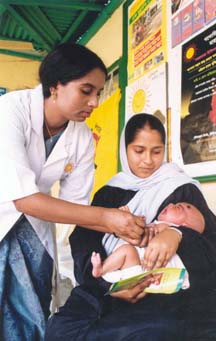
Babe bloodshed is the death of an infant in the start year of life, ofttimes expressed equally the number of deaths per thousand live births (baby mortality rate). Major causes of infant mortality include dehydration, infection, congenital malformation and SIDS.[34]
This epidemiological indicator is recognized as a very important measure of the level of health care in a country because it is directly linked with the health status of infants, children, and meaning women equally well as admission to medical care, socioeconomic conditions, and public wellness practices.[35] [36]
There is a positive relationship between national wealth and skillful wellness. The rich and industrialized countries of the globe, prominently Canada, the United Kingdom, the Us, and Nippon, spend a large proportion of their wealthy budget on the wellness care system. As, a effect, their wellness intendance systems are very sophisticated, with many physicians, nurses, and other health care experts servicing the population. Thus, infant mortality is low. On the other hand, a country such equally Mexico, which spends disproportionately less of its upkeep on healthcare, suffers from high mortality rates. This is because the general population is probable to exist less healthy.[37] In the U.Southward., infant mortality rates are specially loftier in minority groups. For example, non-Hispanic black women have an infant mortality charge per unit of 13.63 per 1000 alive births whereas in non-Hispanic white women it was much lower at a rate of five.76 per 1000 live births.[38] The average infant mortality charge per unit in the U.South. is vi.8 per k live births.[39]
Babyhood
Babyhood is a critical period in personality development when the foundations of adult personality are laid.[40] In contrast toddler is used to denote a baby that has achieved relative independence, in moving about, and feeding.[41]
Gallery
-

-

-

An African babe born to two African parents, with an unusually light skin
-

-

Baby in Zimbabwe
References
- ^ "Neonate". Merriam-Webster online lexicon. Merriam-Webster. Archived from the original on 2007-03-11. Retrieved 2007-03-27 .
- ^ "Infancy". Constabulary.com Legal Dictionary. Law.com. Archived from the original on 2015-09-05. Retrieved 2015-09-30 .
- ^ a b Neonatology Considerations for the Pediatric Surgeon at eMedicine
- ^ Wallace, Donna 1000.; Cartwright, Cathy C. (2007). Nursing Care of the Pediatric Neurosurgery Patient. Berlin: Springer. p. 40. ISBN978-three-540-29703-1.
- ^ Warren SM, Brunet LJ, Harland RM, Economides AN, Longaker MT (2003-04-10). "The BMP antagonist noggin regulates cranial suture fusion". Nature. 422 (6932): 625–nine. Bibcode:2003Natur.422..625W. doi:10.1038/nature01545. PMID 12687003. S2CID 4331659.
- ^ Chicot, Dr Rebecca (2015-12-03). The Calm and Happy Toddler: Gentle Solutions to Tantrums, Night Waking, Potty Grooming and More than. Random House. ISBN978-1-4735-2759-one.
- ^ a b Gartner LM, Morton J, Lawrence RA, Naylor AJ, O'Hare D, Schanler RJ, Eidelman AI (Feb 2005). "Breastfeeding and the Use of Human Milk". Pediatrics. 115 (2): 496–506. doi:10.1542/peds.2004-2491. PMID 15687461.
- ^ Innocenti, UNICEF Part of Research-. "The kickoff one,000 days of life: The encephalon's window of opportunity". UNICEF-IRC . Retrieved 2019-03-28 .
- ^ Wells, Dilys (January 1995). "Baby Feeding". Nutrition & Nutrient Science. 95 (2): 42–44. doi:ten.1108/00346659510078312.
- ^ Marriott and Foote, L.D. and 1000.D. (2003). Weaning of infants. (Review). 88.6. Academic OneFile. ISBN978-1-4129-0475-9.
- ^ Field, T. (2002). "Infants' Need for Bear on". Human Evolution. 45 (2): 100–103. doi:10.1159/000048156. S2CID 144155181.
- ^ a b Hartmut Kasten. "Entwicklungspsychologische Grundlagen der frühen Kindheit und frühpädagogische Konsequenzen" (PDF) (in German). Kostenloser Volltext
- ^ Erik Thiessen, Emily Hill, Jenny Saffran (Jan 2005), "Infant-Directed Speech Facilitates Word Division", Infancy, vol. 7, no. i, pp. 53–71, doi:10.1207/s15327078in0701_5, PMID 33430544
{{citation}}: CS1 maint: multiple names: authors list (link) - ^ Gehirn&GeistSerie Kindesentwicklung No. 1, February 2014, "Püppi, muttu AA machen?", p. 63.
- ^ a b c d "Parents, listen next time your baby babbles". 2014-08-27.
- ^ a b c d Julie Gros-Louis, Meredith J. West, Andrew P. Rex (July 2014), "Maternal Responsiveness and the Development of Directed Vocalizing in Social Interactions", Infancy, vol. 19, no. four, pp. 385–408, doi:10.1111/infa.12054
{{citation}}: CS1 maint: multiple names: authors list (link) - ^ Smith J, Levickis P, Eadie T, Bretherton L, Conway L, Goldfeld S (January 2019). "Associations betwixt early on maternal behaviours and child language at 36 months in a cohort experiencing adversity". International Journal of Language & Communication Disorders. 54 (1): 110–122. doi:ten.1111/1460-6984.12435. hdl:11343/284733. PMID 30387273. S2CID 54389163.
- ^ a b Cláudia Castro Dias, Bárbara Figueiredo (2019-03-06), "Slumber-wake behaviour during the start 12 months of life and associated factors: a systematic review", Early on Child Evolution and Intendance, vol. 190, no. 15, pp. 1–33, doi:10.1080/03004430.2019.1582034, hdl:1822/59691, ISSN 0300-4430, S2CID 151246725, retrieved 2020-xi-01
- ^ "New study provides criteria for good baby slumber for the first time – individual variations big – Press release – THL".
- ^ Paavonen EJ, Saarenpää-Heikkilä O, Morales-Munoz I, Virta One thousand, Häkälä Northward, Pölkki P, Kylliäinen A, Karlsson H, Paunio T, Karlsson L (May 2020). "Normal sleep development in infants: findings from ii big birth cohorts" (PDF). Slumber Medicine. 69: 145–154. doi:x.1016/j.slumber.2020.01.009. PMID 32087408. S2CID 211253429.
- ^ Kathrin Keller-Schuhmacher (2010) Bindung – von der Theorie zur Praxis: worauf kommt es an? Referat anlässlich der Fachtagung der AWO vom eight. November 2010 in Freiburg i.Br., (PDF; 111 kB).
- ^ Helmut Johnson (2006) Bindungsstörungen Textile zur Systemischen Arbeit in Erziehung und Betreuung. (PDF; 72 kB).
- ^ Esposito G, Yoshida South, Ohnishi R, Tsuneoka Y, Rostagno Mdel C, Yokota South, Okabe S, Kamiya K, Hoshino Chiliad, Shimizu M, Venuti P, Kikusui T, Kato T, Kuroda KO (May 2013). "Baby calming responses during maternal carrying in humans and mice". Current Biology. 23 (9): 739–45. doi:10.1016/j.cub.2013.03.041. PMID 23602481.
- ^ Urs Hunziker, Ronald Barr (1986-05-01), "Increased Carrying Reduces Baby Crying: A Randomized Controlled Trial", Pediatrics, vol. 77, no. 5, pp. 641–648, ISSN 0031-4005, PMID 3517799, retrieved 2020-02-02
- ^ Infant Historic period Restrictions Archived 2016-03-26 at the Wayback Motorcar. Delta Airlines. Retrieved on 2013-04-27.
- ^ Morris Eaves; Robert N. Essick; Joseph Viscomi (eds.). "Songs of Innocence and of Experience, copy AA, object 25 (Bentley 25, Erdman 25, Keynes 25) "Infant Joy"". William Blake Archive. Archived from the original on January 17, 2014. Retrieved January 16, 2014.
- ^ Tronick, Edward Z.; Morelli, Gilda A.; Ivey, Paula K. (1992). "The Efe forager infant and toddler's design of social relationships: Multiple and simultaneous". Developmental Psychology. 28 (4): 568–577. doi:10.1037/0012-1649.28.4.568. "Until recently, scientific accounts ... of the babe's early social experiences converged on the view that the infant progresses from a primary relationship with one individual... to relationships with a growing number of people... This is an epigenetic, hierarchical view of social evolution. We take labeled this dominant view the continuous intendance and contact model (CCC...). The CCC model developed from the writings of Spitz..., Bowlby..., and Provence and Lipton... on institutionalized children and is represented in the psychological views of Bowlby...[and others]. Common to the different conceptual frameworks is the belief that parenting practices and the infant's capacity for social engagement are biologically based and suit to a prototypical form. Supporters of the CCC model mostly recognize that the infant and caregiver are able to adjust to a range of conditions, but they consider the adjustments observed to reflect biological variation. All the same, more than extreme views (due east.grand., maternal bonding) consider certain variants as non adaptive and as compromising the child'southward psychological development. Bowlby's concept of monotropism is an exemplar of the CCC perspective...".
- ^ Bretherton, I. and Munholland, Grand., A. Internal Working Models in Attachment Relationships: A Construct Revisited. Handbook of Attachment:Theory, Enquiry and Clinical Applications 1999 eds Cassidy, J. and Shaver, P., R. Guilford press ISBN 1-57230-087-6[ folio needed ]
- ^ Cicchetti, Dante; Carlson, Vicki (thirty June 1989). Child Maltreatment: Theory and Research on the Causes and Consequences of Child Abuse and Neglect. ISBN9780521379694 . Retrieved 21 Dec 2018.
- ^ Klitzing K von, Simoni H, Amsler F, Burgin D: The office of the father in early on family interactions. Inf Mental Health J 1999; 20: 222–37.
- ^ von Klitzing K, Simoni H, Bürgin D (Feb 1999). "Child development and early triadic relationships". The International Journal of Psychoanalysis. lxxx ( Pt one): 71–89. doi:10.1516/0020757991598576. PMID 10216817.
- ^ von Klitzing K, Bürgin D (January 2005). "Parental capacities for triadic relationships during pregnancy: Early predictors of children's behavioral and representational functioning at preschool historic period". Infant Mental Health Journal. 26 (1): xix–39. doi:10.1002/imhj.20032. PMID 28682511.
- ^ Erlich, Nicole; Lipp, Ottmar V.; Slaughter, Virginia (2013). "Of hissing snakes and angry voices: human infants are differentially responsive to evolutionary fear-relevant sounds". Developmental Science. sixteen (6): 894–904. doi:10.1111/desc.12091. PMID 24118715. Lay summary – Science News (September 9, 2013).
- ^ Garrett, Eilidh (2007). Babe Bloodshed: A Continuing Social Trouble. Ashgate Pub Co. ISBN978-0-7546-4593-i. [ page needed ]
- ^ Hertz Eastward, Hebert JR, Landon J (July 1994). "Social and environmental factors and life expectancy, baby mortality, and maternal mortality rates: results of a cross-national comparing". Soc Sci Med. 39 (1): 105–14. doi:10.1016/0277-9536(94)90170-eight. PMID 8066481.
- ^ Etchegoyen Grand, Paganini JM (April 2007). "The relationship between socioeconomic factors and maternal and infant health programs in thirteen Argentine provinces" (PDF). Rev Panam Salud Publica (in Castilian). 21 (four): 223–30. doi:ten.1590/S1020-49892007000300005. PMID 17612466. Archived (PDF) from the original on 2018-04-21.
- ^ Brym, Robert (2007). Sociology: Your Compass for a New Earth. Wadsworth/Cengage Learning. p. 546. ISBN978-0-495-09912-3.
- ^ Kuehn, B. M. (2008). "Infant Mortality". JAMA: The Journal of the American Medical Association. 300 (20): 2359. doi:10.1001/jama.2008.642.
- ^ Baby Mortality Charge per unit (Deaths per 1,000 Alive Births), Linked Files, 2006–2008 Archived 2012-06-12 at the Wayback Motorcar. statehealthfacts.org
- ^ Human being Growth Development and Learning 2004 Ed. p. l. ISBN 971-23-3911-4 2004 "... is mainly through prespeech forms of crying, babbling, gesturing, and emotional expressions. In babyhood, understanding comes from a combination of sensory exploration, motor manipulation, and, toward the end of babyhood, from questions to answers. Babyhood is regarded as a critical period in personality development because it is the time when the foundations of adult personality are laid."
- ^ Developmental Psychology. p. 121 ISBN 971-23-2463-10 1998 "However, Hurlock (1982) cites that infancy, compared to babyhood, is characterized by extreme helplessness. The word baby may too suggest a helpless individual; hence, the discussion toddler has been increasingly used to denote a baby that has accomplished enough command of his body to allow relative independence, such every bit' moving about, feeding himself, etc. Characteristics of Childhood The almost important characteristics of babyhood are listed below: 1. Information technology is the true foundation age .."
External links
 | Wikiquote has quotations related to: Babies |
 | Wikimedia Commons has media related to Babies. |
 | Look upwards infant in Wiktionary, the gratuitous dictionary. |
- American University of Pediatrics
- The impact of buggy orientation on parent-infant interaction and infant stress
- The World Health Study 2005 – Brand Every Mother and Child
- Infant eyesight – University of Illinois
- Simkin, Penny; Whalley, Janet; Keppler, Ann (1991). Pregnancy, Childbirth and the Newborn: The Complete Guide (Revised ed.). Meadowbook Press. ISBN978-0-88166-177-4.
Source: https://en.wikipedia.org/wiki/Infant
0 Response to "Did Noral Ose the Baby Un Beung Humnz"
Publicar un comentario