Format Accepted by Facebook for Photo Upload
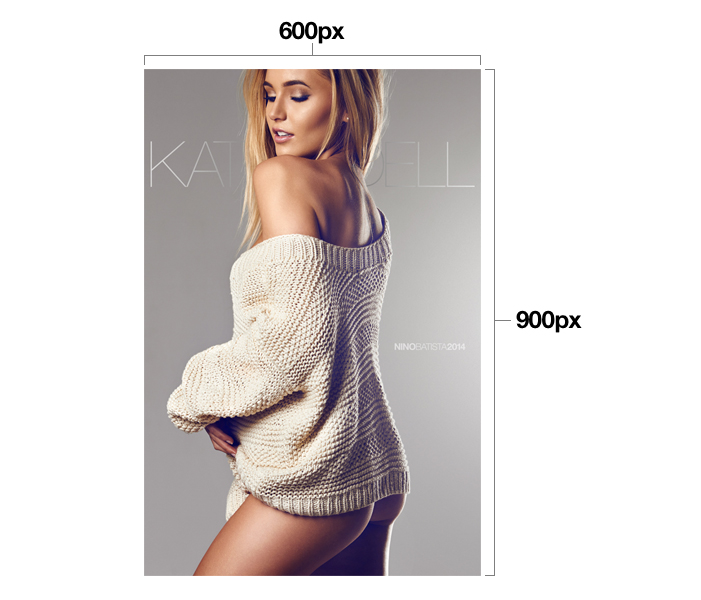
If in that location is one thing I go asked, and that has been answered online time and once again, information technology'southward "How do I get my photos to wait like I want them to look on Facebook?" followed immediately by "Why does Facebook ruin my photos anyhow?" and finally "I just want my photos to expect crawly on Facebook."The lesser line is, Facebook does requite united states options, loopholes if you like, and nosotros but demand to adhere to them and our images will look stellar. But, what are these magical settings? I decided I was going to fuse my 2 careers together into one article, and explicate it all as best I tin can. Assuming Facebook doesn't change these someday shortly, here are the full details on what I practise (at least) to make my images on my Facebook Page look clear, precipitous, and with minimal or no data pinch, as of December 13, 2014. Let's start with some history, because thorough knowledge is better than hasty knowledge. At the end of this commodity, I take added minor, dated updates since it was published equally new information became available. Note: If you don't desire to bother learning virtually the technical aspects of file types and epitome data on the web, and just desire to brand your photos look better on Facebook, skip this section and curl down. At present then, when you discuss photos on Facebook, you are actually discussing image information on the internet, broadly speaking. Having some groundwork in spider web design would aid y'all as a photographer striving to showcase their work online, but not everyone has that luxury. I started working as a web designer in 1997, and worked on my last website project as recently as 2013, and I can tell you that showing images on the web isn't as linear and uncomplicated as one might think. Yeah, it can get complicated and technical, but at that place are also tons of unnecessary bits of tech information we photog'due south don't demand to worry near. And then allow'south pause it down into the elements that a photographer in the modern, net age needs to be concerned with. There are bonkers amounts of digital epitome (raster) file types in the globe, for every industry from film to websites to medicine, and information technology tin can striking you with the subtlety of a squadron of flying mallets when you lot commencement dive in to the discipline. So, to make it simpler, we volition only talk over the file types that chronicle to images on the spider web, and more than specifically file types that thing on Facebook. Permit'due south start with the one you lot've probably heard of (well, more often than not likely anyhow, since your camera can create these types of files), which is the industry standardJPG. Keep in heed, JPG was originally JPEG, which is an acronym for Articulation Photographers Proficient Group, the committee that created the file type standard. JPG is what is known every bit a "lossy pinch format", or a file type that utilizes data compression to decrease overall file size, but at the sacrifice of image quality (sharpness, smoothness, colour consistency, etc) That said, just because JPG uses data compression, it does not mean that a minimally compressed JPG file is "bad" or "low quality". JPG paradigm quality can vary wildly depending on the compression settings, so don't discount it as a good format for your images. You don't really accept much choice, though, considering JPG is the de facto standard format for digital images on the web. Desire to know fifty-fifty more than technical details? I recommend y'all start with the Wikipedia entry virtually JPEG (warning: heavy reading). Check out the aforementioned file as a JPG compressed to quality 100 (minimal compression) and a JPG compressed to quality 0 (maximum pinch). Use the slider to compare, and note that the 100 quality version is 445kb and the 0 quality version is 31kb. We don't want our images looking like the 0 quality version, dang it! Side by side up isGIF,which stands for Graphics Interchange Format, and is unlike from JPG in many means. This extremely antiquated file type (kickoff introduced by CompuServe in 1987) made its style onto the internet via goofy, simplistic graphics in the spider web's infancy. In modern times it was given a stay of execution, in terms of mutual usage, because of one main reason: information technology supports animated sequences via sequential frames. While the GIF format is extremely express in color (tin can only support up to 256 total colors in whatever given file, or said some other manner, less than .01% of the color information of a RAW file, making it worthless for contemporary digital photographers) the fact that it was implemented equally ane of the prototype file standards for web browsers and it supports frame sequences kept it live and popular. Heck, now we have entire websites dedicated the fascination of "Funny GIFs". Video sequences tin can be converted into comparatively smaller sized GIFs, though with a signifcant quality loss and no audio, and can play on whatsoever browser, and so this format perseveres. And although GIF supports transparent pixels, as information technology were, it is seldom used for this purpose since information technology has been effectively replaced past PNG for that purpose. Which is keen because GIF does diddly squat for us photographers showcasing our piece of work online. Experience gratuitous to read upward on GIF's history if you're down for that sort of thing. Wanna come across what a pro lensman's image looks like every bit an viii-color GIF vs a 256-color GIF? Information technology'due south pretty significant. Utilize the slider below, and also note how both versions are crummy ways to show your images online if quality is a concern for reasons of chip depth, only also see that color management goes out the window as embedded profiles are not supported. 1994 chosen, they want their spider web images back. Which of grade brings u.s.a. finally to PNG, the "newest" of the common image formats for the spider web, introduced in 1996. PNG stands for Portable Network Graphic, and dissimilar JPG is non a lossy compression format. Thankfully different GIF, it supports many thousand times more colors, which is a good thing, but as well makes way larger files. This is one reason why PNG didn't take off immediately in the early stages of the mainstream web, every bit dial-up access meant downloading a 1MB PNG photograph was impractical (read: slow as hell). As a lossless format that supports as much as 32 fleck RGBA colour, the immediate reaction to the uninitiated might exist "PNG is the format for me", simply there is a catch. For one thing, while the web browsers of the world support 8-bit (PNG-8) and 24-bit (PNG-24) PNG files, remember that it is a lossless format. In other words, PNG uses no lossy compression to decrease overall file size. The consequence is that image quality is not compromised, merely proceed in mind that the same pixel dimension JPG file at minimal compression is e'er quite a bit smaller than a PNG-24 at the same pixel dimensions.You tin become jiggy with thedetails about PNG too, if over again you lot are so inclined. Check out this 2048x1365 px image equally a minimally compressed JPG (ii.3MB) vs a PNG-24 (4.4MB). Even the well-nigh militant digital photophile would be hard pressed to tell the difference betwixt them, simply the fact remains that the PNG is nigh exactly twice as big as the JPG. PNG-24 also supports something called alpha transparency, which is hugely useful and used regularly by web designers. Photographers, not so much. Yous desire your images to look as amazing on Facebook as they exercise in Photoshop, or at least darn close, but lo and behold, Facebook makes merry with your images when you lot upload them and now they look like poop. This happens because your files are being converted by the Facebook systems, and the cease effect is having your file turn into a significantly compressed JPG file. The horror! Are you asking yourself, or perhaps screaming at your display, "Why!!??!". Well, the answer is simple practicality. Facebook receives (no joke) well over 100,000,000 image uploads per day. I'll intermission a second to let that sink in. 100 one thousand thousand photos. Every mean solar day. And that figure is likely quite a lot higher. And then it is no stretch to imagine that Facebook has some pretty pregnant file serving and chapters concerns regarding images. Therefore, when the average Facebook user (who is usually not a lensman) starts to upload their vacation snapshots at total resolution (because of class they would), the Facebook system kicks in to resize and shrink these images immediately upon upload. This function can reduce the overall size of a batch of full resolution, minimally compressed images by equally much as 99%, helping file storage and data hosting considerations across the board for Zuck & Co. This works merely bang-up for 99% of Facebook users because 99% of Facebook users just want their friends to see that they were drunk as a skunk in Bermuda, and how funny that snapshot is. Quality of said drunk prototype is irrelevant to these 99%, and then the paradigm gets uploaded and shown on feeds, the user who posted it is pleased, and Facebook saves a crapchunk of data capacity. Remember, Facebook is merely a website, and web standards employ beyond the board. Anyhow, the unfortunate thing is that we are photographers. For the states, paradigm quality is not just preferred, it is our very livelihood. So when we first upload that epic, super abrupt, colorful image of the helpmate & groom from the about recent gig, and Facebook kicks in and resizes and compresses information technology, we feel threatened. We worry that potential clients may see it and think "This isn't very sharp, I dunno that I similar this photographer'south piece of work very much." The practiced news is, most potential clients can't tell the difference. The bad news is, you are a photographer, and yous notice. Therefore, it matters that you get the matter resolved. If you lot've ever researched the "uploading your photos to Facebook" subject field in detail before, then y'all may very well know that other pixel dimensions also work across 900x600, simply I am going to kickoff with the type of image I upload the about, vertical portraits, and I dearest how they piece of work on the web at these dimensions: Rather than get into the details of why this works, I volition just say you should actually be using Photoshop for purposes of file prep, and beneath are the primal bullet points (that work for me 100% of the time) you lot need to know to prep your vertical photos for Facebook: NOTE: Using the same process above, except sizing your comprehend banner paradigm to 851x315 px, you can upload a crisp and clear PNG as your Page's embrace paradigm. Quickie visual in case it helps ya out: Next, and this is crucial, you need to know where this file works on Facebook and where it doesn't. If you don't know this stuff upward front, you will endeavor to do them and and so you'll be aroused at me, and then brand mental notes of these: Feeling express? Fear not, because Facebook knows that business concern Pages need to exist able to show images clearer, and without getting compressed, and that is what you can exploit. But you have to follow the rules they've laid out in order for it to work: If y'all did everything correctly, your epitome should have been accepted by the Facebook Page organization as a PNG-24, and unchanged. As such, it should look amazing (or how it looked when you saved it on your bulldoze, at the very least). Every bit for horizontal images, all the same considerations utilise, but I strongly recommend these settings: Effort this out, and allow me know if it works for yous. If you take whatsoever doubts virtually the results I get with this, check out my Facebook Page portfolio (warning: glamour) and browse around. You'll discover minimally compressed JPGs and super clear PNG-24 files everywhere. IMPORTANT: When browsing Facebook via any mobile device, all bets are off. Facebook uses a different aspect of its file delivery system, compressing data (including and particularly images) on-the-fly as you download (view) them via mobile. Basically, nothing I reviewed in this article volition directly bear on your mobile Facebook feel. The good news is, JPG compression is less noticeable on a mobile device, for the most part. So, don't panic. UPDATE 12/21/14: Further experimenting with uploading to my Facebook Page has yielded a new issue. I uploaded a PNG-24 direct, to my timeline on my Page, and it remained unchanged (stayed as a PNG). This is dissimilar than my experiences before, so I am exploring why this suddently worked on this particular image. I theorize file size has something to do with information technology. UPDATE ii/10/15: It seems Facebook has changed its Photo Uploader interface. As of this week, I noticed the "High Quality" checkbox is now, in fact, in the upper left and not the bottom left as I mentioned above. UPDATE 4/20/16: I've confirmed (by repeated tests yielding the same result 100% of the fourth dimension) that uploading a PNG file to your Folio that is more than 1MB volition cause the file to be converted to a JPG (and subsequently over-compressed). I plant that if I tried a 960x640 PNG that ended upward 1.1MB, I could simply make it 900x600 and it would be only below the 1MB limit, and therefore not get converted to JPG. Recall, PNG is "lossless compression", non "no pinch", meaning that while no quality is lost upon saving as PNG, the file size is determined by the overall complexity (number of colors used, etc) of the file. UPDATE 5/9/17: There seem to be somewhat conflicting reports on whether or non 2048px long side JPG files work, as either horizontal or vertical. Many photographers take encountered tons of problems trying this, and others merits information technology works every time. Attempt it out and see what happens for you if you want larger verticals. UPDATE three/5/nineteen: Currently I am uploading every image I add to Facebook at 2048px long side, as a minimally compressed JPG, with consistent success. So far, I have not encountered an issue with this approach for almost a year, and find the results to be quite good, even on my Profile. On occasion, some images seem negatively affected, but for the near part this has worked well since early 2018 from what I have seen. It is my conventionalities that Facebook has expanded their capacity capabilities exponentially, and can be more generous with file sizes these days. If there is a glaring error on any of this information, be sure to point it out in a smug comment beneath! The Technical Stuff
File Types
JPG


GIF


PNG
And This Means What on Facebook?
Source: https://fstoppers.com/originals/how-i-upload-my-photos-facebook-or-photographers-guide-photo-formats-web-49658
0 Response to "Format Accepted by Facebook for Photo Upload"
Publicar un comentario